







Key takeaways
- There is no single website price: your business, page count, a reference, design complexity and your budget decide the quote.
- A proper proposal has a scope of work, a timeline and support.
- Many quotes leave out post-launch support, a how-to guide, a clear scope and the real timeline.
- Budget for hosting, email, maintenance, apps, content and year two, not just the build.
- Before you pay, make sure the domain and every login are in your name.
Ask ten developers how much a website costs and you will get ten different numbers. That is not because nine of them are lying. It is because "a website" is not one thing, and anyone who gives you a price without asking you questions first is guessing.
So if you are asking how much does a website cost in the UK or the USA, here is the honest answer: there is no single price. There are only the questions that decide your quote. This post explains those questions, the costs people forget to budget for, and the six questions you should ask any developer before you pay.
The questions that decide your quote
When a client comes to us for website development services, I do not quote a price in the first message. I ask direct questions first, because the answers change the price completely:
- What is your business? A restaurant website, a clinic, a store, a consultancy — each one needs different things. A site that takes bookings is a different job from a site that just shows your work.
- How many pages are in the website? Five pages and fifty pages are not the same project. Page count is the simplest, most honest driver of cost there is.
- Do you have a reference? A site you like, a style you want, something that shows me what "good" looks like to you. A reference saves ten rounds of guessing.
- What kind of design complexity do you want? A clean template-based design and a fully custom design are different amounts of work. Complexity is not about looking fancy — it is about how much has to be built from scratch.
- What is your budget? I ask this often, directly. Not to charge you more — to show you the right options. If I know what you have allocated for the project, I can show you suggestions and references that actually fit, instead of wasting your time on things you were never going to buy.
How a proper quote is actually built
This is how I quote, and how any honest developer should quote.
First, I give you the standard pricing — what a website like yours usually looks like at a standard level. Then the custom pricing, which depends entirely on your requirement: what you need, how big your business is, what the site has to do. We discuss that together, build a roadmap, and then I give you a proper proposal.
What most other quotes leave out
Clients never show me the other quotations they received. They just say "your services are expensive" or "your services are cheap." The quote itself stays hidden — which is exactly why comparing quotes is so hard.
But from what clients tell me, here is what is usually missing from other quotes:
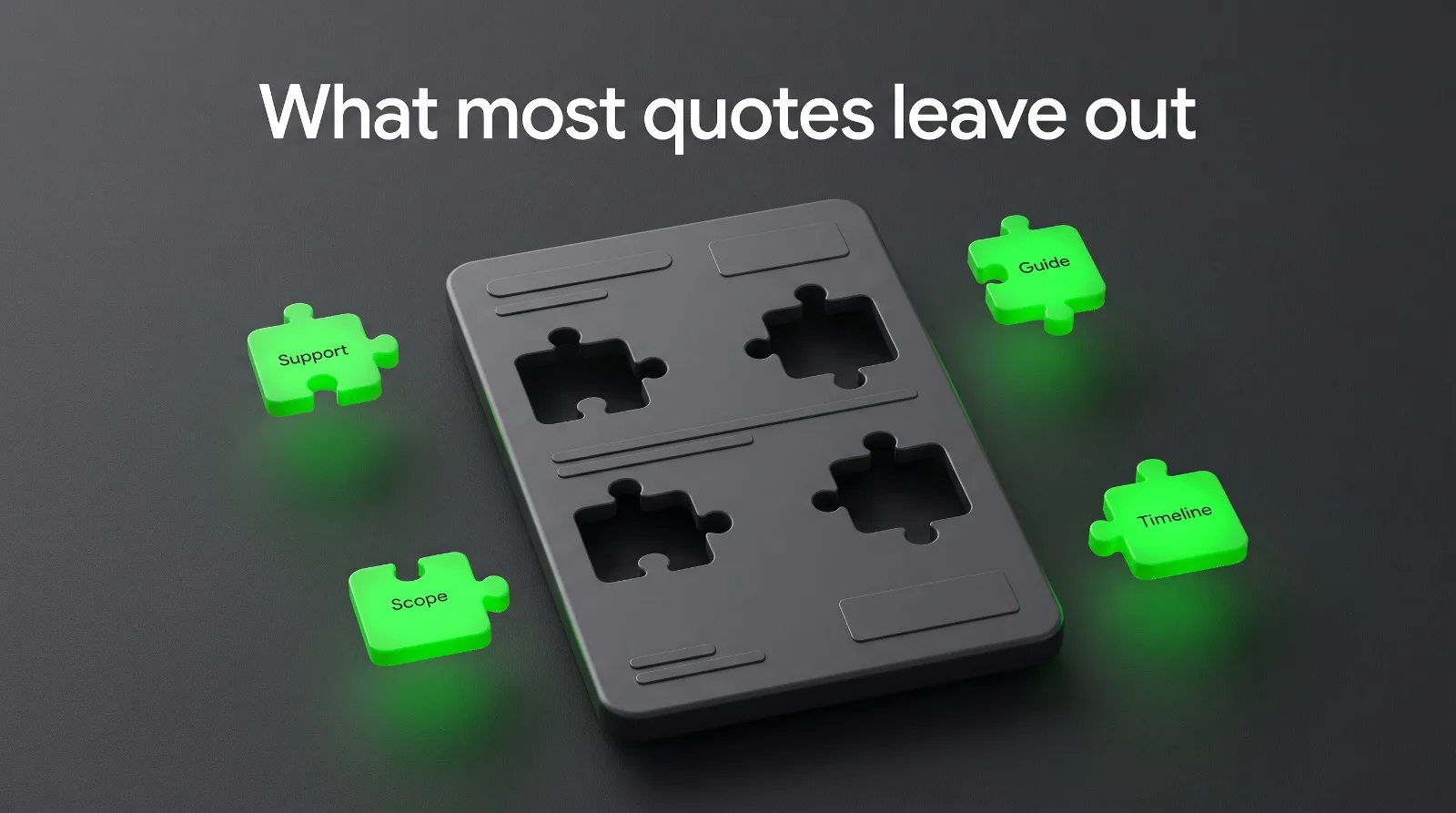
No support after launch. Most quotations do not include even one month of support. The site goes live, something breaks or needs a small change, and there is nobody to call.
No guided PDF or guided video. Nobody shows the client how to use their own website — how to change text, add a photo, check an enquiry. You are handed a site and left to figure it out.
No proper scope of work. The quote does not say clearly what is included and what is not. That is where the arguments start later: "I thought this was included."
A timeline that hides the real timeline. Most people quote a short timeline and hide the actual one. Then the project takes far longer than promised. A short timeline on paper means nothing if the real work takes three times as long.
If a quote is missing these four things, it is not cheaper. It is incomplete.
What clients forget to budget for
This is where the real surprises live — not in the build price, but in everything around it.
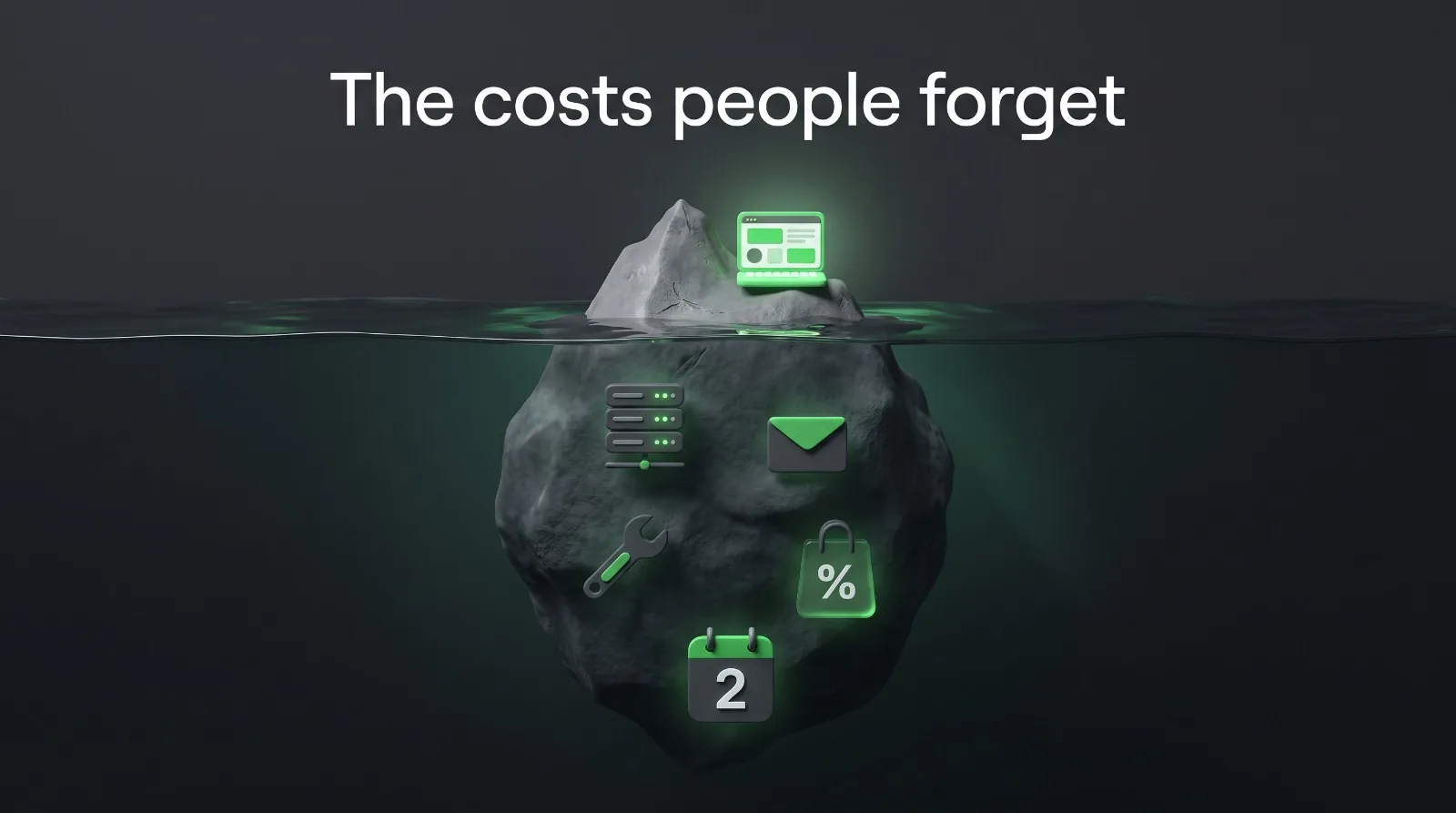
For a portfolio website: hosting, maintenance, and email. Clients mostly forget these completely. They do not know these are separate prices. Hosting is not the website. Maintenance is not the website. Business email is not the website. Each one has its own cost, and none of it is in the build quote unless someone tells you.
For a Shopify store: the subscription, and the cuts on every order. The Shopify subscription itself is quite expensive, and that is not in most people's minds when they budget. Then Shopify takes a 2% cut on every purchase. Then the payment gateway takes its own cut, around 2% as well. Most store owners never calculate either of these into their actual product price — so the margin they think they have is not the margin they actually have.
Third-party apps: the subscription you forgot you started. When a store needs a function, people install a third-party app. What they forget is to read the app's subscription properly — after a certain limit, the app starts charging, and the money starts getting cut automatically. These are the small leaks that add up. Be careful with them: check what an app costs after its free limit before you build your store around it.
Year two. The first year is the build. The second year is the real cost of owning a website: hosting renewals (introductory prices often rise on renewal), maintenance, email, and the apps you added along the way. A website is not a one-time purchase. Budget for the second year before you approve the first.
Content. Who writes the words and takes the photos? If it is not in the quote, it is not included — and good content is real work that someone has to do.
6 questions to ask any developer before you pay
Ask these before you sign anything. The answers will tell you more than the price will.
- Is the domain in my name? If it is not, you do not own your own website address.
- Is the price fixed, or can it change? What exactly is included, and what costs extra?
- What does year two cost? Hosting, maintenance, email, renewals — get the number now, not later.
- How many revisions are included? And what happens when you want a change after launch?
- Can I edit the site myself? Will you show me how — a guided video or document — or am I locked out of my own site?
- Do I get all the logins? Domain, hosting, email, admin — everything. If a developer will not hand over logins, walk away.
The bottom line
A website does not have a price. It has a scope, and the scope has a price. The cheapest quote is usually the one that left the most things out — the support month, the scope of work, the honest timeline, the hosting, the email, the second year.
So do not ask "how much does a website cost?" Ask "what does this quote include, what does it leave out, and what will year two cost me?" The developer who answers those questions clearly is the one worth hiring — even if their number is not the lowest.
If you want a proper answer for your business, tell us what the site needs to do: your business, your pages, a reference you like, and the budget you have in mind. We will give you a standard price first, then a custom proposal with a roadmap — and we will tell you honestly what it includes.
Related reading: How Long Does It Take to Build a Website? · How to Choose a Web Design Agency