








WordPress and Shopify are the two platforms we build on most. Both can run a fast, good-looking site. They suit different businesses, and picking the wrong one usually shows up a year later as extra cost or a rebuild.
The short answer
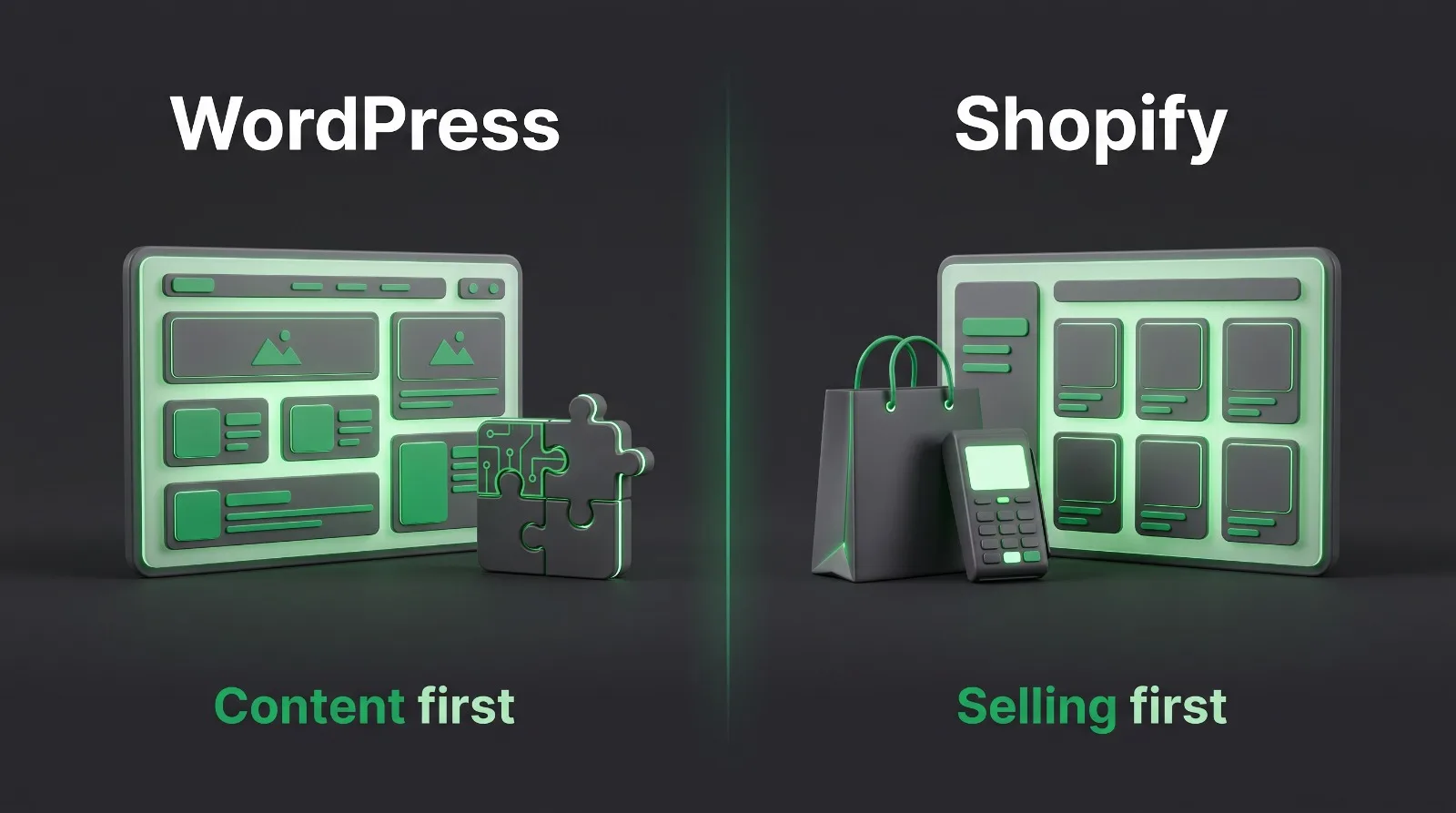
- Choose Shopify if selling products online is the main job of the site. Checkout, payments, inventory, shipping and taxes are built in and maintained for you.
- Choose WordPress if content, services, bookings or a custom layout come first, or if you want full control over hosting and code. WooCommerce can add a store when you need one.
How they differ
| Shopify | WordPress | |
|---|---|---|
| Best for | Product stores | Content, service and custom sites |
| Hosting & security | Included and managed | You choose a host and keep it updated |
| Checkout | Built in | Added with WooCommerce or another plugin |
| Design freedom | High, within Shopify themes | Very high with a custom theme |
| Running costs | Monthly plan plus app subscriptions | Hosting, premium plugins and maintenance |
Questions to ask before you decide
- How many products will you sell, and how often do they change? A large or fast-moving catalogue fits Shopify's admin well.
- Who will update the site? Shopify's admin is simpler for store staff. WordPress gives editors more page-building freedom.
- Do you need features that aren't commerce? Memberships, directories, complex forms or heavy blogging lean towards WordPress.
- What will you pay each month? Add up the plan or hosting, paid apps or plugins, and maintenance, not just the build.
Speed and SEO on either platform
Neither platform is fast or slow by default. Speed comes from image sizes, lazy loading, the theme and how many apps or plugins run on each page. On ALI Collectibles, a WordPress comic store we built, optimising images and lazy loading cut load times noticeably. Both platforms let you set page titles, descriptions, clean URLs and structured data, which is what search engines and AI assistants read.

How we help
We build Shopify stores as an official Shopify Partner and custom WordPress sites with our own themes. If you're unsure, tell us what you sell and how your team works and we'll recommend one with reasons.
WordPress vs Shopify for small business
If you run a small business, the WordPress vs Shopify question usually comes down to how much of your week you want to spend running the website itself. Shopify suits a small team that wants the store, checkout, payments and hosting handled in one place. You pay a monthly plan plus apps, and most of the maintenance is done for you. WordPress suits a small business that wants more control: a custom layout, a blog that carries the site's SEO, or pages that do not fit a store template. You choose the hosting and keep plugins updated, or hand that to a maintenance plan.
Either way, the platform is not what ranks your site. Speed, clear page titles, honest copy about what you sell, and pages that answer real customer questions do that, on WordPress or Shopify alike. If you want a straight answer for your own business, tell us what you sell, how many products you have, and who updates the site day to day. We will recommend WordPress or Shopify with reasons, and build it either way.